Housing
A Place to Start. A Path to Stay. A Future to Build.
Housing at Summit Hallow is not static. It is designed as a long-term progression system that allows families to grow, contribute, and put down permanent roots without being forced out as their lives evolve.
This model recognizes a simple truth: stability is built over time, and commitment should be rewarded with permanence.
Rather than separating “workers,” “owners,” and “residents” into disconnected classes, Summit Hallow provides a clear housing pathway that allows families to move forward while remaining within the same trusted community.
The housing ladder
Summit Hallow housing is structured in defined stages. Families may enter at different points, but long-term participation leads to long-term security.
- Encourage commitment and continuity
- Reduce turnover and instability
- Reward contribution with permanence
- Keep families rooted in one place over generations
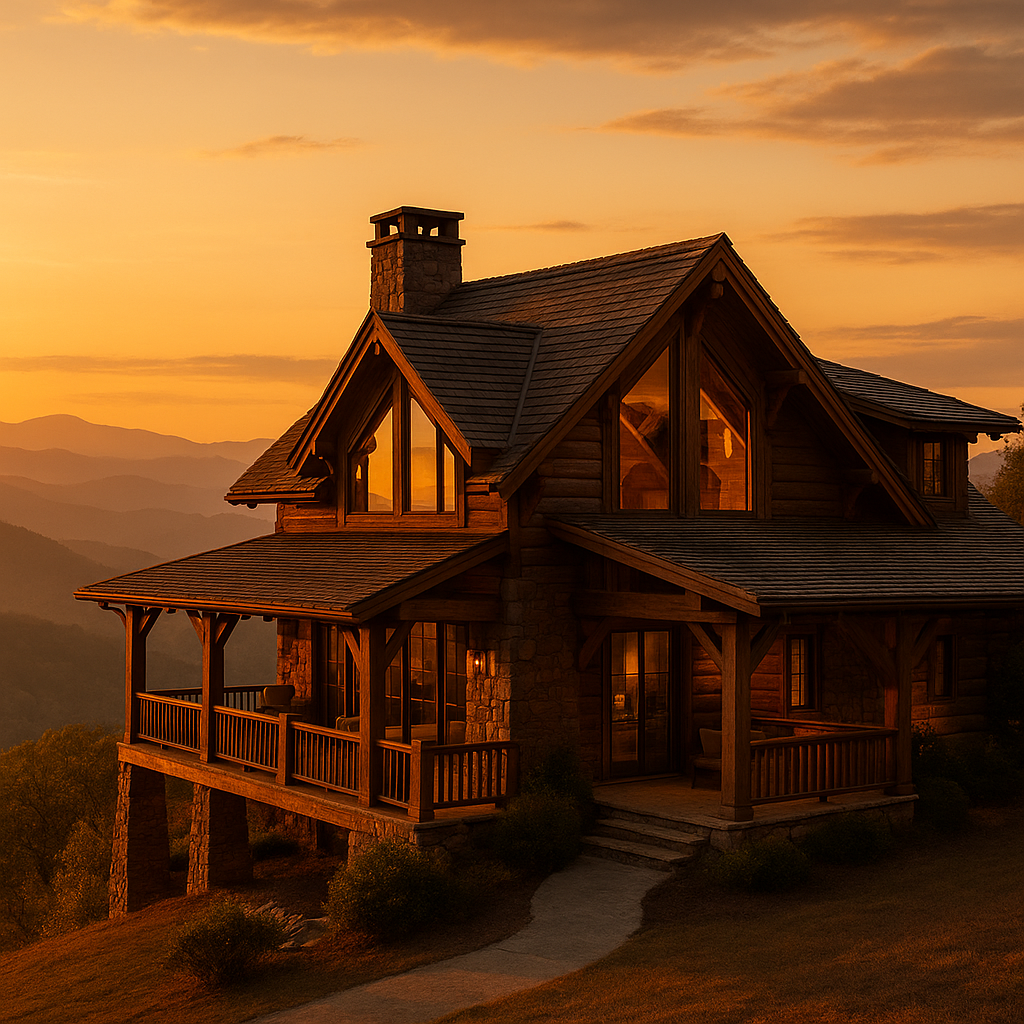
Stage 1
A calm, well-supported starting point: immediate stability, predictable overhead, and proximity to shared resources so families can integrate and settle.
Stage 3
After seven years of continuous employment and good standing, eligible employee families can transition into permanence—under a 75-year renewable land lease.
The housing ladder
Families may enter at different points, but the system is designed so long-term participation leads to long-term security. This progression exists to keep families rooted in one trusted community over decades.
Stage 1 · Entry & family cabins
Family cabins and entry-level housing provide a calm, well-supported environment for families joining the Summit Hallow community. These homes are designed for safety, comfort, and proximity to work and shared resources.
- Offers immediate stability
- Is connected to shared infrastructure
- Keeps overhead predictable
- Allows families to integrate into community life
This stage removes friction at the beginning, allowing families to focus on work, parenting, and settling in.
Stage 2 · Employee family housing
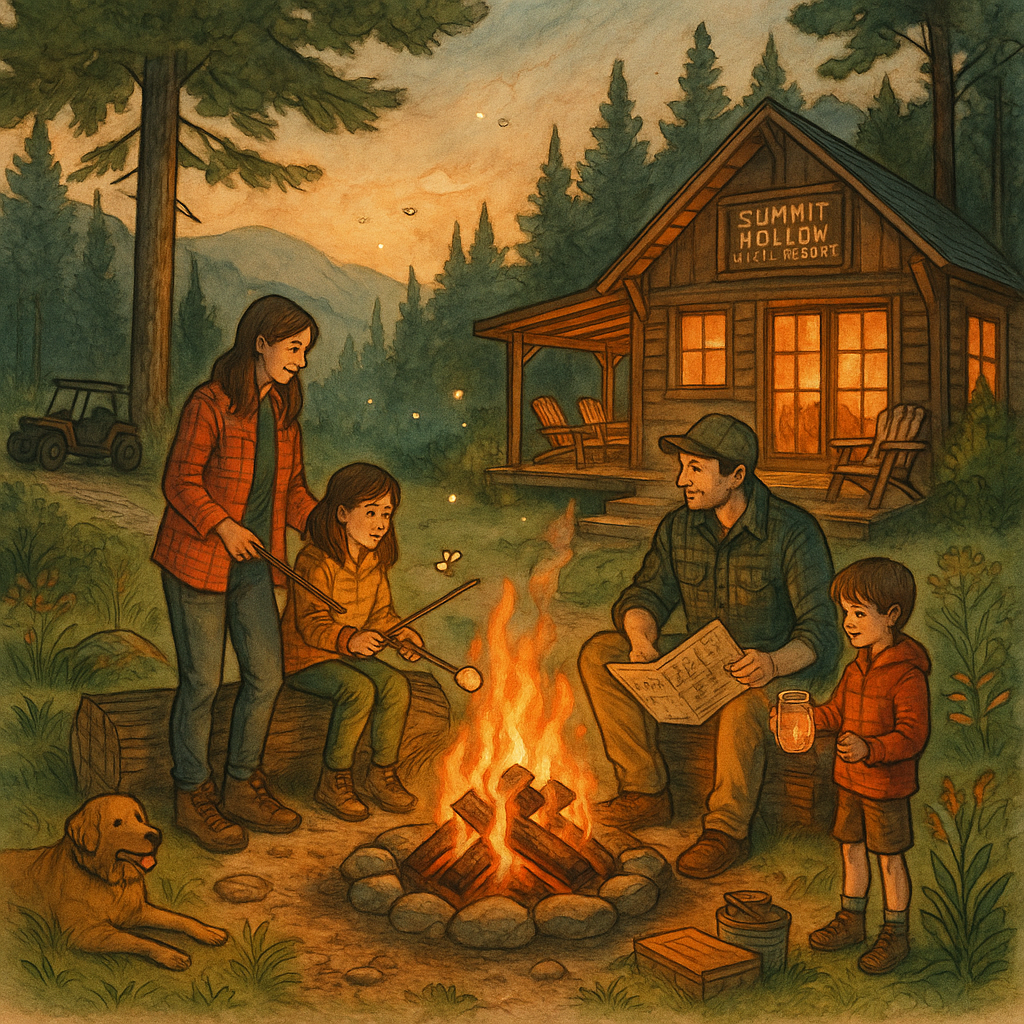
Employee family housing is designed for long-term team members who support resort operations, homestead systems, and shared infrastructure. These homes are typically approximately 1,500 square feet on five-acre parcels—offering space, privacy, and connection to the land.
- Is tied to long-term employment
- Provides consistent, reliable living conditions
- Reduces commuting and life disruption
- Keeps families close to work and community
This stage reinforces workforce stability while allowing families to remain fully embedded in the community.
Stage 3 · Permanent homesteads
After seven (7) years of continuous employment and good standing, eligible employee families may transition into permanent homestead status.
- Families may move into or build a permanent homestead
- Land is provided under a 75-year renewable land lease
- Lease terms mirror those of investor homesteads
- Families gain long-term housing security without speculation
Seven years is long enough to demonstrate commitment, alignment with community standards, reliability and stewardship, and long-term intent. Permanence is not granted quickly—but it is granted intentionally.
The 75-year land lease model
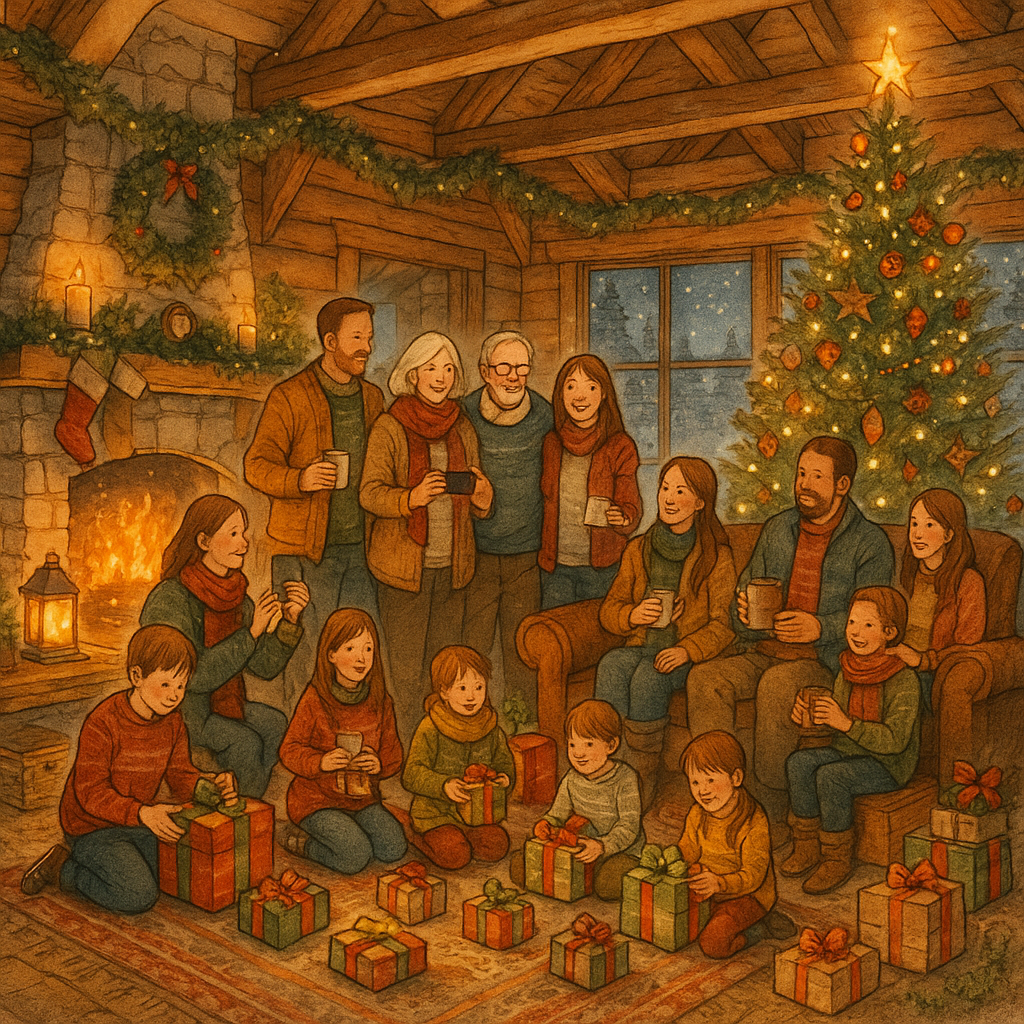
Permanent homesteads operate under long-term 75-year land leases, ensuring families can plan for decades while protecting the integrity of the community and land.
- Provides generational housing security
- Prevents short-term flipping or speculation
- Keeps land aligned with community purpose
- Encourages stewardship over extraction
Families can build real homes, raise children, and plan legacies—without the instability of short-term arrangements or the pressure of speculative markets.
Investor & employee parity
Investor homesteads and earned employee homesteads operate under the same long-term land lease structure. While the path to entry differs, the destination is intentionally aligned.
- No permanent second-class residency
- Shared standards across the community
- Mutual respect between contributors
- A unified long-term vision
Contribution—not origin—determines permanence.
Why this model exists
Modern housing systems force families to move repeatedly—breaking social ties, disrupting children, and eroding community trust. Summit Hallow’s housing progression exists to do the opposite.
- Keep families in one place
- Allow children to grow up with continuity
- Preserve relationships over decades
- Build a community that compounds rather than resets
Built for decades, not seasons
- Support families through multiple life stages
- Reduce stress and uncertainty
- Reward loyalty with stability
- Anchor the community for generations
This is not temporary housing. This is a place to build a life.