Livestock
Integrated Animals, Regenerative Land, Real Food
Livestock at Summit Hallow is not managed as isolated production units. Each species is intentionally integrated into the broader homestead system to support soil health, food security, and long-term land stewardship. Herd sizes are kept small, rotations are deliberate, and animal welfare is foundational.
Every animal has a job beyond food production.
Featured video
A visual walkthrough that complements Summit Hallow’s approach: small herds, deliberate rotations, and animals integrated into soil, pasture, and food systems.
What to watch for
- Movement: short-duration grazing with meaningful rest
- Diversity: multiple species solving different land problems
- Soil cover: living roots and reduced bare ground
- Water: improved infiltration and fewer erosion patterns
- Animal calm: low-stress handling and predictable routines
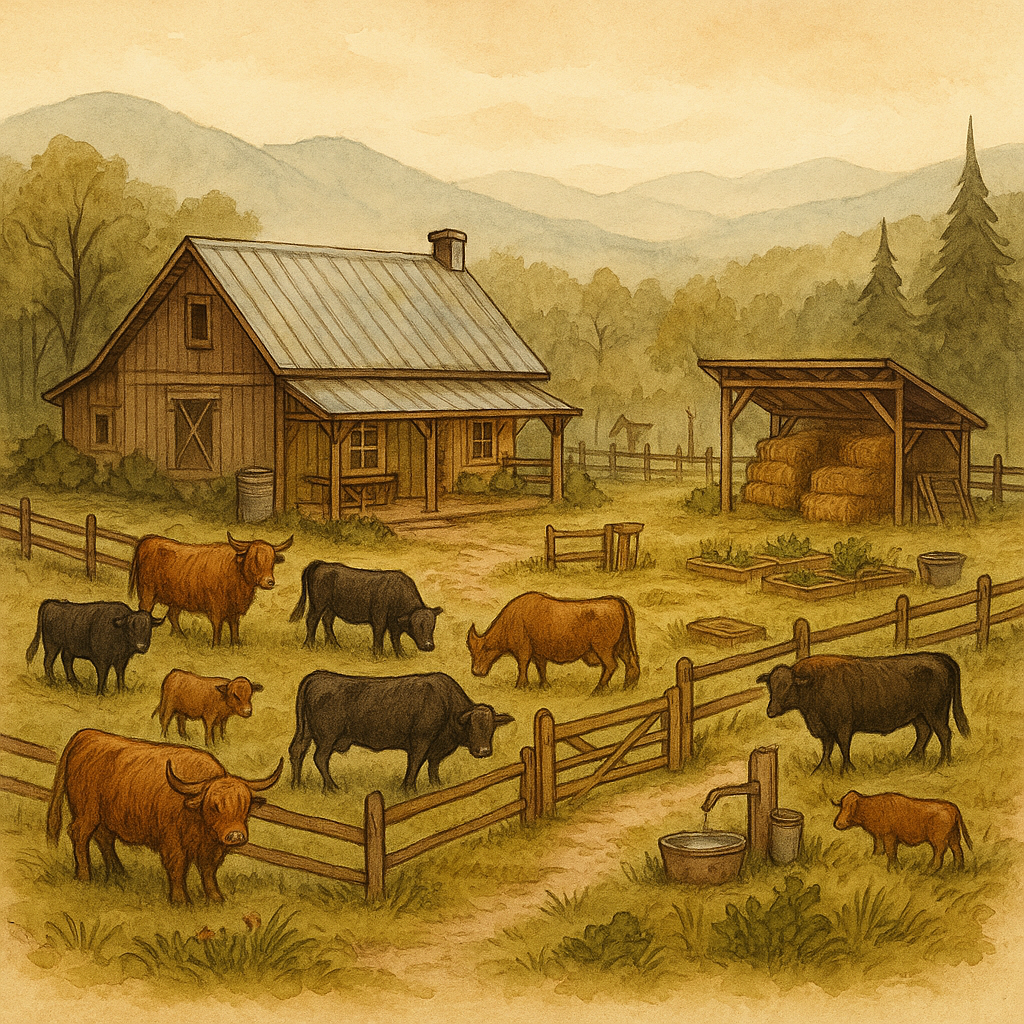
Cattle
Rotated frequently through diverse grass systems, cattle stimulate plant growth, fertilize soil naturally, and help maintain healthy grasslands.
- 100% pasture-based diets
- Low-density herd management
- Frequent paddock rotation
- Seasonal alignment with grass growth
- Pasture-raised beef for residents and resort kitchens
- Natural soil fertilization and carbon cycling
- Long-term pasture regeneration
Cattle are never confined or grain-finished. Their role is as much about healing the land as it is about producing food.
Pigs
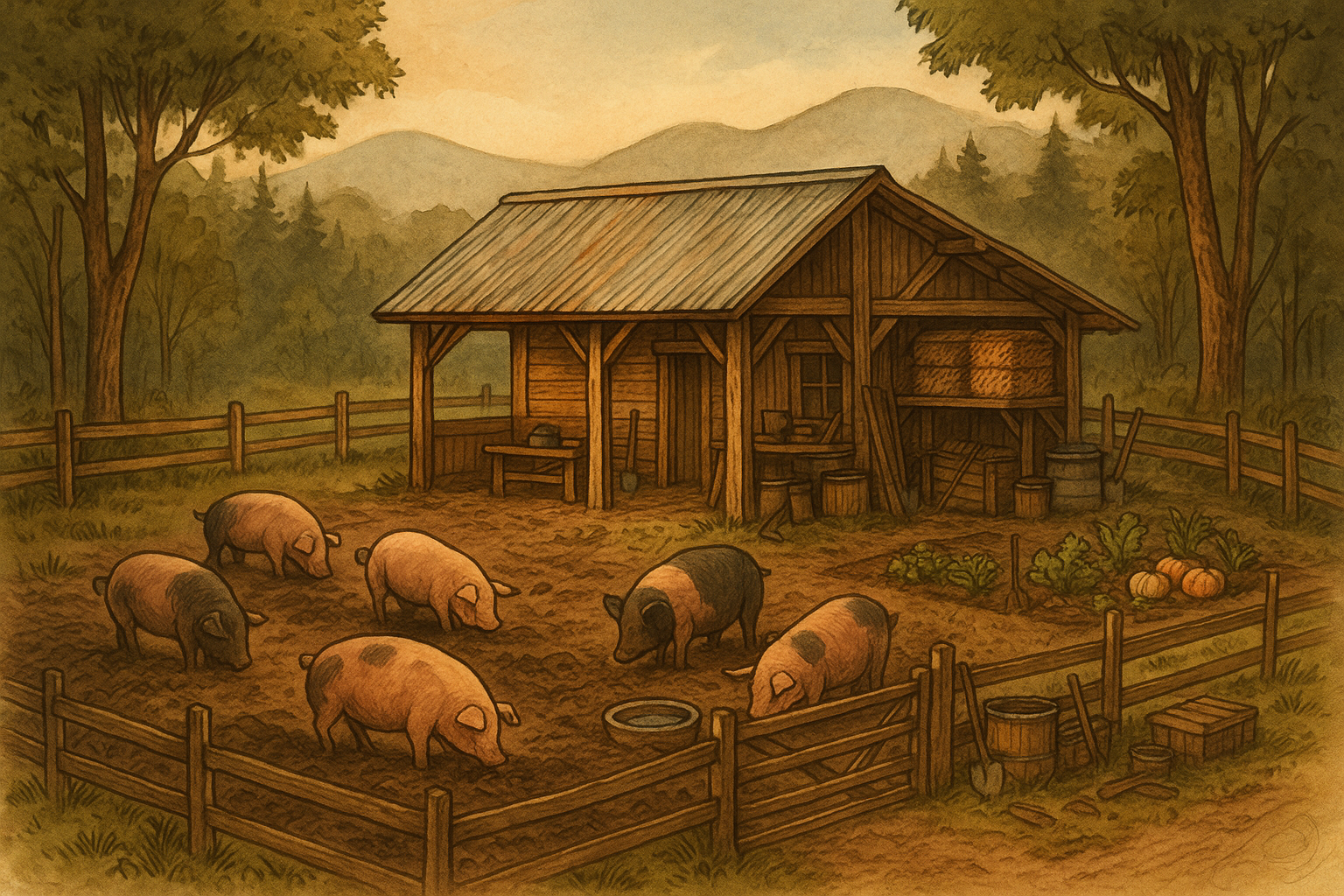
Managed in controlled paddocks, pigs convert surplus vegetables, perennial tubers, and agricultural byproducts into high-quality protein while supporting land preparation and nutrient cycling.
- Controlled rooting zones
- Short-duration paddock use
- Integration with garden and orchard rotations
- Pasture-raised pork
- Efficient use of surplus produce and feed
- Soil preparation for future planting zones
Pigs are rotated carefully to prevent over-disturbance, ensuring soil structure and microbial life remain intact.
Poultry
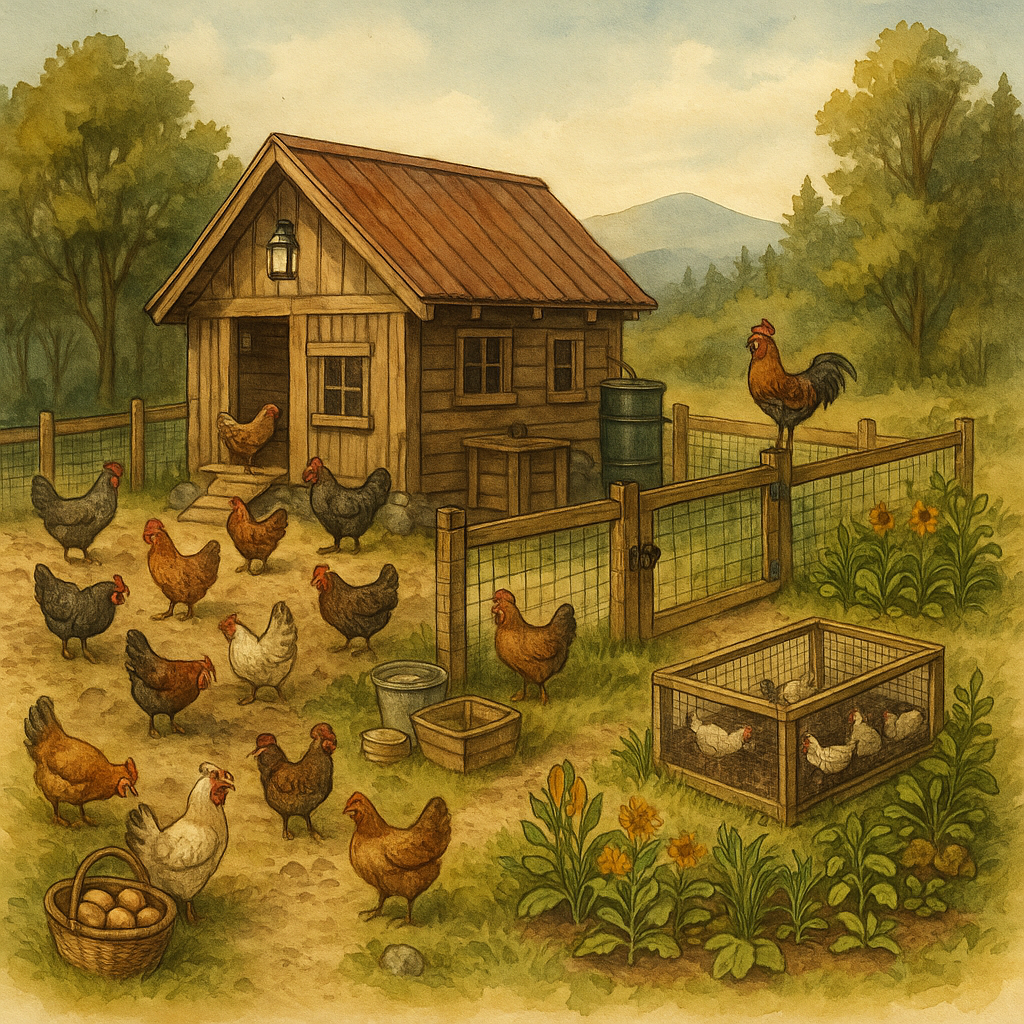
Poultry are mobile by design. Chickens and other birds follow grazing animals and garden cycles, spreading fertility, reducing insect pressure, and producing eggs and meat.
- Pasture access with mobile housing
- Frequent movement to fresh ground
- Integration with orchards and garden edges
- Fresh eggs for residents and guests
- Supplemental poultry meat
- Natural pest control
- Even nutrient distribution across land
Dairy
Dairy animals are kept in limited numbers to ensure humane care, consistent quality, and manageable labor demands. Production is aligned with pasture availability and seasonal rhythms.
- Calm handling and predictable routines
- High-quality forage and clean water
- Seasonal production rather than forced yield
- Fresh milk for resident households
- Small-batch dairy products for on-site use
- Educational exposure to ethical dairy practices
Dairy remains intentionally small and personal, focused on quality, animal health, and sustainability rather than volume.
Rotational grazing & pasture management
All livestock species are managed within a unified rotational grazing plan. Pastures are rested between use, allowing plants to recover and soils to rebuild.
- Protects root systems and soil structure
- Improves water retention and biodiversity
- Naturally reduces parasite pressure
- Builds resilient pasture systems over time
Grazing plans are adjusted seasonally and scaled to herd size to ensure balance.
Humane care
- Clean, reliable water access
- Adequate space and shelter
- Low-stress handling practices
- Immediate response to health concerns
Healthy animals create healthier food systems—and healthier communities.
Homestead products
- Eggs
- Dairy products
- Pasture-raised beef, pork, and poultry
- Resort dining programs
- Resident households
- The Homestead Store and curated offerings
Every product remains traceable, local, and directly connected to the land.
Education & transparency
Livestock operations are intentionally open and educational. Guests and residents are encouraged to understand how animals are raised, how land is managed, and how ethical food systems function.
- Species-specific pasture walks
- Family-friendly demonstrations
- Seasonal stewardship workshops
Transparency reinforces respect for animals, land, and the work behind every meal.
Designed for the long term
Summit Hallow’s livestock systems exist to serve the land first, the community second, and production third. By assigning each species a clear role and managing them with care, the homestead creates a resilient, ethical food system designed to endure for generations.
This is agriculture with intention.